PETESSE Experience: Sourcing Risks In Pet Products—And How We Keep Them Under Control
Author: PETESSE
In our experience, in B2B pet products, confidence doesn’t come from promises. It comes from reducing the four failures our customers worry about most—quality claims, stockouts from late deliveries, compliance issues, and the“nobody takes responsibility”problem when something breaks.
PETESSE is built around preventing these four pain points, using real checkpoints and real corrective actions—based on what we’ve seen across years of export programs and multi-category sourcing.
Pain Point 1—Quality Failures That Trigger Returns Or Claims
Quality 'flips' usually don’t happen at the final step. They start upstream—materials, process execution, and small inconsistencies that become expensive at destination.
What we do that directly targets return/claim risk:
• Material sourcing and incoming checks
o In some categories, we use audited raw material suppliers—especially fabrics and certain accessories—supported by PETESSE’s 20+ years of apparel manufacturing experience and sourcing accumulation.
o In other categories, the material base is typically tied to the manufacturer’s supply chain: for example, dog kennels and pet strollers rely on steel, while cat trees and bird houses rely on wood. In these cases, we work with the manufacturer’s established suppliers but apply our own incoming standard.
o When raw materials and accessories arrive, we run an in-house inspection/testing immediately, and send the received materials/accessories to our customer for confirmation to ensure they match all requirements before production starts.
• Third-party testing when needed
o If required, we submit materials/components to SGS / Intertek (ITS) for testing.
• In-line inspection (the biggest quality lever)
o We don’t treat inspection as“a number of times.”We treat it as process-driven—what to check depends on the production stage.
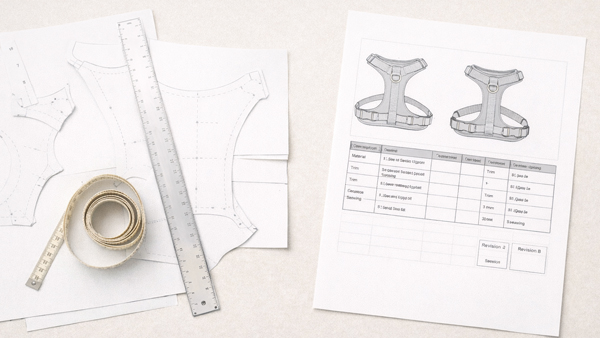
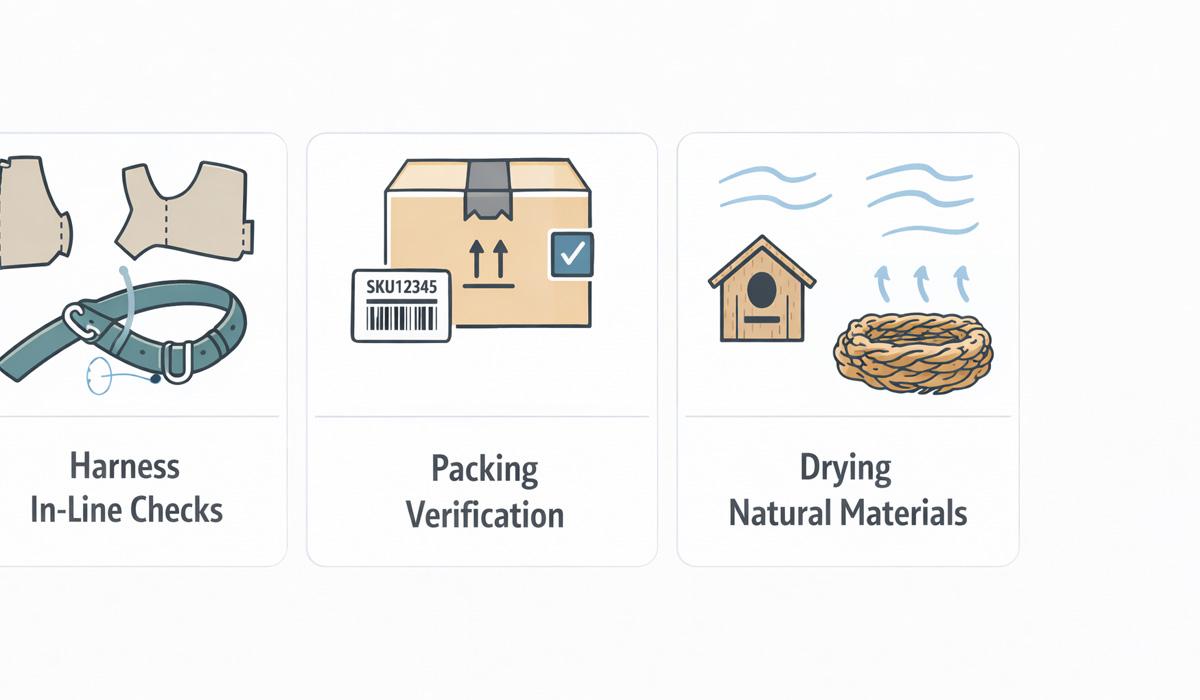
o For example (dog harness):
After fabric cutting / before sewing: check whether the cut panels match the approved pattern and whether seam allowance is sufficient for sewing requirements.
During sewing: check if the D-ring is secure, and whether panel colors are matched correctly.
After semi-finished goods flow out: check sizing within tolerance and confirm all details match the approved pre-production sample.
o This is where most quality issues get stopped—before packing.
See Dog Harness Programs
• Final inspection focuses on costly errors buyers actually feel
o At this stage, major quality issues are usually already solved in-line. Final checks focus on what causes warehouse and channel problems:
Barcode sticker / SKU sticker placement
Correct shipping marks
Carton strength and packing condition
o Additional experienced note on natural materials:
Some buyers want raw wood / raw grass products, such as certain bird house or bird nest items that are not carbonized/treated.
In those cases, we often ask buyers to allow extra drying time. Otherwise, even if final inspection is OK, a long shipment (often close to a month) in a sealed environment can lead to mildew when the goods arrive—because the product wasn’t fully dried before packing.
• How PETESSE handles problems
o Minor issues: our QC team fixes them on site, then we summarize internally to prevent recurrence. If it’s useful for our customer, we share what we learned.
o Issues that can’t be fixed on site: we immediately inform our customer with full details, discuss the solution together, and we execute the agreed plan and take responsibility.
Related read: Our workflow in action
Pain Point 2—Lead Time Delays That Cause Stockouts
Customers don’t just need a lead time—they need a plan that holds up when production reality forces corrections.
How we reduce“late shipment→stockout”risk:
• Before order confirmation, we confirm lead time based on quantity and manufacturing scheduling:
o Harness / leash / collar: typically 50 days
o Pet trailer: typically 60 days
• When delays happen, they usually happen for one reason:
o During in-line inspection, a problem is found and must be corrected properly—which takes additional time.
• In those cases, we commonly use a practical workaround:
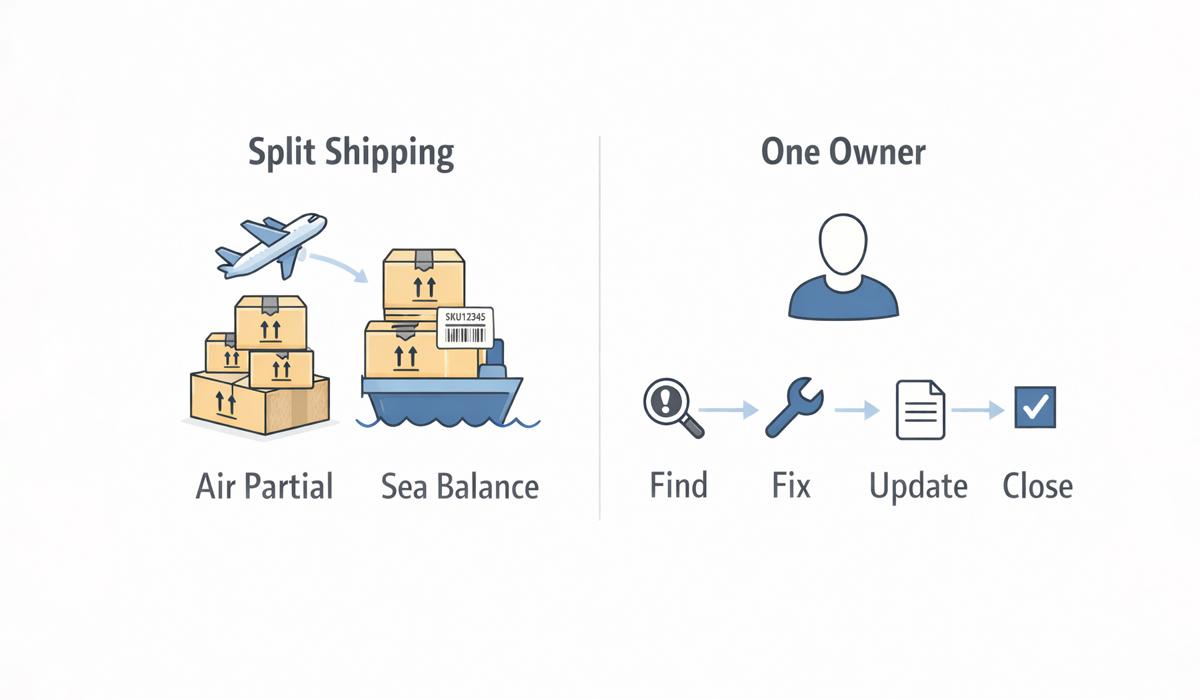
o Part air shipment + part sea shipment
o You receive the air portion first to support early listing and sales, while sea shipment fills inventory afterward.
• Over roughly 20 years of export experience, we have faced this kind of situation about 7–8 times. We also appreciate that many of our customers plan buffer time or coordinate warehousing/sales on their end—the really help us a lot.
Pain Point 3—Compliance Issues That Lead To Takedowns Or Penalties
Compliance failure is expensive because it can damage listings and trigger fines. The best control point is early requirement alignment and correct manufacturer assignment.
How we reduce compliance risk:
• At the start, we confirm exactly what is needed: certificates / testing / market requirements.
• Then we assign production to qualified manufacturers suited to those requirements. This is the core step that prevents most compliance surprises.
• For products with stronger IP/patent exposure, we flag risk early:
o For example: slow feeder bowls and dog interactive toys.
o Another example: certain pet cooling mats may involve patent rights in some markets (e.g., the United States).
o We recommend our customers confirm whether a product falls within protected scope or secure the right to sell in their market with appropriate local professional guidance.
Pain Point 4—When The Supply Chain Breaks, Nobody Takes Responsibility
This is where trust breaks down: a problem happens, and every party points to someone else—especially when customers are thousands of miles away from the factory.
PETESSE takes ownership across the full chain, including coordination that buyers rarely see—but absolutely feel when it fails.
An example from PETESSE’s early domestic sourcing years:
• We encountered this twice in China: before Chinese New Year, factories are extremely busy and sometimes prioritize larger orders, leaving smaller orders unprocessed.
• In our case, our goods were already produced and only lacked packaging—but waiting would have missed the shipping window.
• We pulled manpower from other factories, moved the goods back to our warehouse, and packed them ourselves to get the shipment out before the holiday.
That experience is exactly why our export programs are managed with one principle: when something goes wrong, PETESSE owns the outcome, and we coordinate with our customers not only on production and shipping, but also on sales readiness and after-sales resolution when needed
Share Your Pain Points And Target Lead Times
PETESSE manufactures and supplies pet products for wholesale and distribution programs.
Related Reading
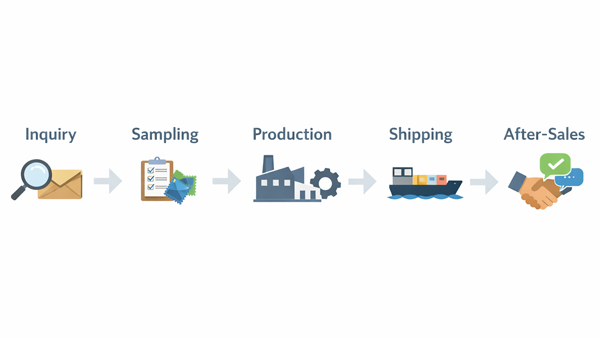
PETESSE Workflow: From Inquiry To Delivery—How We Run Orders

Private Label Pet Feeding Mats: Fix The Top Causes Of Complaints And Returns

Private Label Pet Feeding Mats: Simple Assortments That Look Clean And Reorder Well

ODM Pet Carrier Programs: Practical Design Choices For Retail-Ready Collections