Silicone Vs TPE Foldable Pet Bowls: Real Differences, Real Price Gaps, Real Market Fit
Author: PETESSE
Silicone And TPE: Why This Category Keeps Getting Messy
Foldable bowls are one of those pet travel staples that“everyone sells.”Scroll through any marketplace and you’ll see the same silhouette: collapsible walls, a clip or carabiner, and a promise that it’s safe for food and water.
That sameness is exactly why material language gets blurred. In practice,“silicone”becomes a shorthand consumers use to mean soft, safe, and low-odor. Meanwhile, plenty of products described loosely as silicone are actually TPE—or mixed-material builds that don’t behave the way buyers expect.
For B2B buyers building a wholesale pet accessories assortment—or planning a private label travel line—the material choice shows up later in reviews, returns, reorders, and where the SKU can realistically sit on the shelf.
The Honest Material Split In Product Terms
Think of it like this:
Silicone usually plays the steadier, more“premium-feeling”role. It supports repeated use messaging and tends to hold its reputation better when the product is folded, washed, and used hard.
TPE is often the value workhorse. It can deliver a soft feel and competitive cost, which makes it a common choice in price-sensitive bulk order programs—especially when speed and volume matter.
Neither is automatically“better.”They simply win in different parts of the market.
Where Performance Differences Actually Show Up
Odor (The Fastest Way A Listing Gets Hurt)
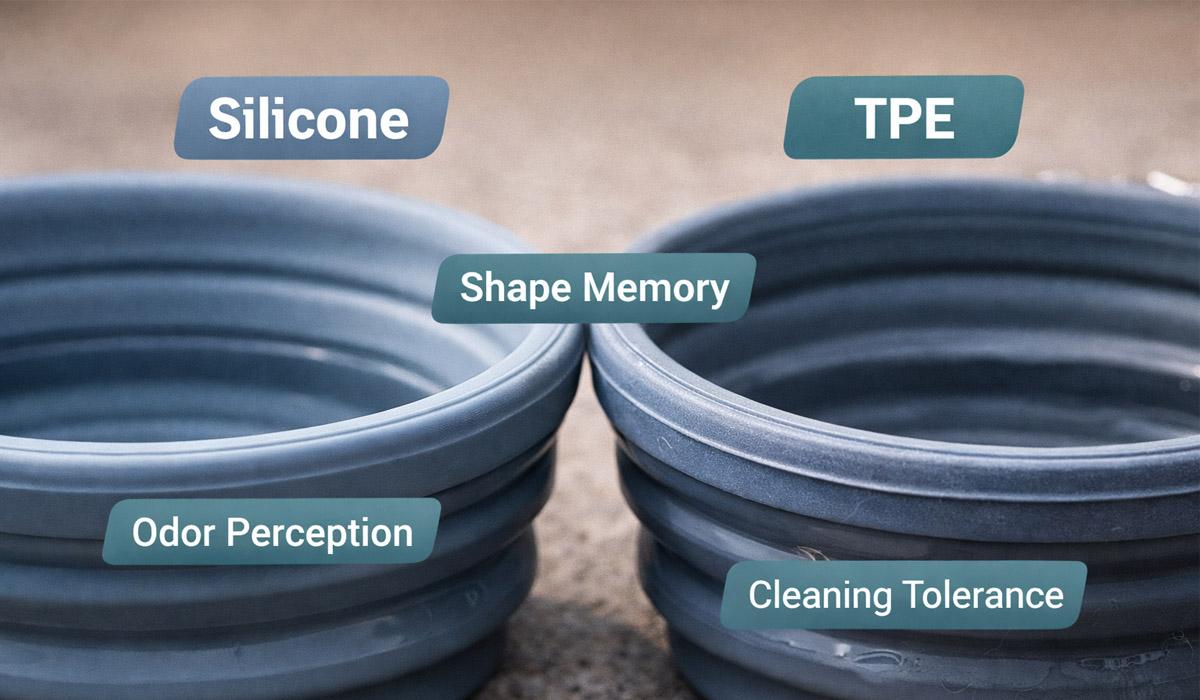
In this category, odor complaints can outweigh everything else. Buyers don’t talk about polymer families—they talk about“rubbery smell.”Market perception tends to favor silicone because it’s easier to position as clean and low-odor. TPE can perform well too, but the experience is more sensitive to formulation and process consistency, which is where value-tier SKUs get exposed.
Cleaning Tolerance (Wet Food + Travel Reality)
Foldable bowls rarely live a gentle life. They go into backpacks, get rinsed fast, and sometimes end up holding wet food. Silicone SKUs commonly carry a stronger“wash-friendly, repeated-use”vibe. TPE SKUs are widely accepted as practical, everyday travel bowls—functional, cost-focused, and easy to range broadly.
Fold Fatigue And Shape Memory
The quiet failure mode is deformation: rims that soften, walls that look tired, bowls that don’t stand confidently once unfolded. Silicone is typically easier to keep“stable”in the customer’s hands over time. TPE can hold up well too, but it leans more heavily on structural choices—rim geometry, wall thickness, and base stiffness—especially as sizes get larger.
Grip And Feel (Small Detail, Big Perception)
TPE often feels a bit softer and grippier, which can be a plus on slick surfaces. Silicone often feels cleaner and springier. It’s not a headline feature, but it strongly affects the first-impression“cheap vs solid”moment.
Why The Price Gap Exists When The Bowls Look The Same
On the surface, both bowls collapse, clip on, and hold water. But pricing in this segment isn’t just about raw material—it’s about the total risk profile for a channel.
Silicone bowls often sit more comfortably in mid-to-premium ranges because they support a cleaner brand narrative: steadier shape, fewer surprise complaints, and a stronger“keep using it”feel. In many markets, that’s what protects margin.
TPE bowls tend to win in entry-level ranges because the value proposition is straightforward: a functional travel bowl at a sharp price, ideal for wide color assortments and fast-moving wholesale pet supplies lines.
If you’ve watched review patterns, the split is familiar: value tiers get pressured by smell and deformation comments; higher tiers get judged on whether the product feels worth the upgrade.
The Three Confusions That Keep Showing Up In The Market
“Food Grade”Sounds The Same Everywhere
Consumers read the same phrase across dozens of listings and assume identical performance. In reality, the difference is consistency—how the bowl arrives, how it feels, and how it holds up after weeks of folding.
“Foldable”Doesn’t Equal“Durable”
Two bowls can fold perfectly on day one and age very differently. The market rewards bowls that feel confident when opened—no soft rim, no gradual collapse, no unstable stance.
“Holds Water”Isn’t The Whole Story
A bowl that technically holds water can still feel annoying if the sidewall droops, the rim deforms, or the base slides. Those aren’t spec-sheet issues. They’re repeat-buy issues.
View OEM & Private Label Options
Market Positioning: Where Each Material Usually Wins
In real assortments, silicone foldable bowls often behave like a brand-support SKU. They fit better in travel collections that need to feel dependable and justify a cleaner price tag—especially in channels where long-term customer feedback matters.
TPE foldable bowls often behave like a volume SKU. They’re easy to place in entry lines, bundles, seasonal promotions, and quick replenishment sets. For many distributors and retailers, TPE keeps moving when the shelf needs a sharp, accessible option.
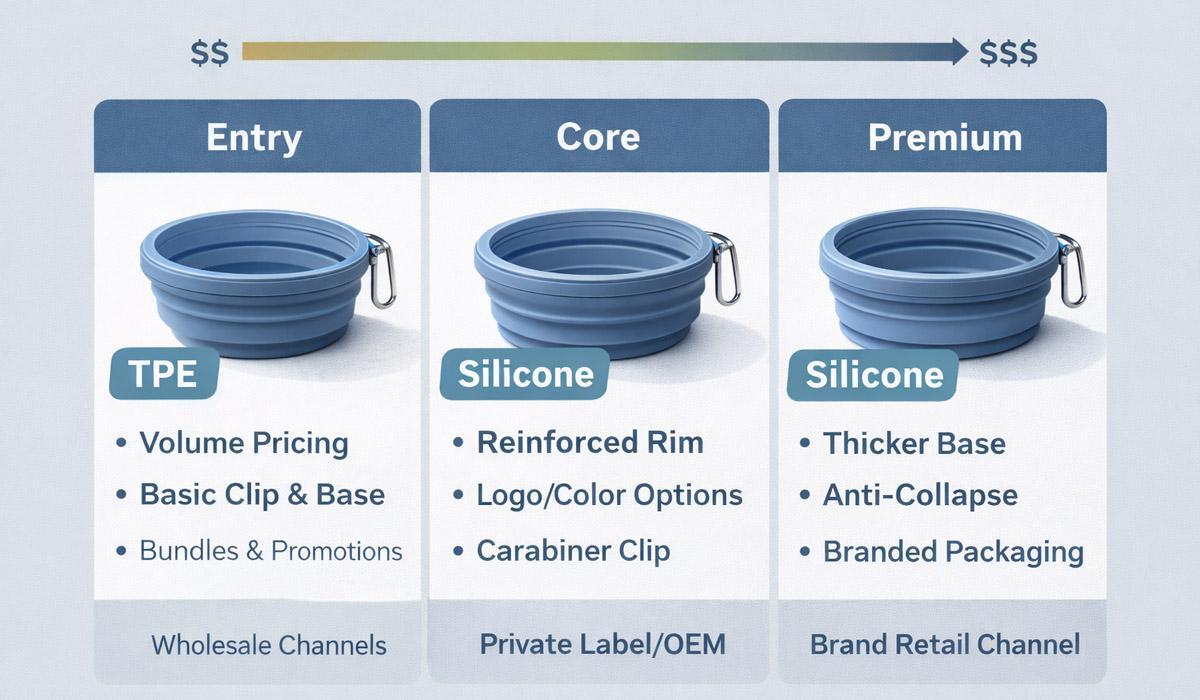
A common B2B ladder looks like this: entry tier built around TPE for speed and price, core tier using silicone with sturdier structure and cleaner finishing, and a premium tier where silicone is paired with upgraded design cues and packaging that supports higher perceived value.
Request Wholesale Pricing & MOQ
Related Reading
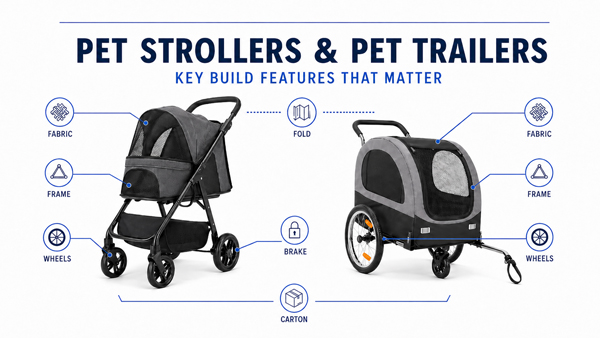
Pet Strollers & Trailers: The Build Details Buyers Check Before Placing a Bulk Order
OEM Pet Outdoor Beds: Weather-Ready Fabrics And Easy-Clean Designs For Wholesale
ODM Pet Water Fountain Manufacturer: Quiet Flow, Easy Cleaning, Retail-Ready Designs
Dog And Cat Harness Sourcing: OEM Options That Keep Fit And Finishes Consistent